AI and Blockchain Convergence Reshapes Global Markets as Compute Demand and Institutional Tokenization Accelerate
AI data centers, tokenized assets and regulated stablecoin settlement are reshaping global markets as crypto miners pivot toward compute infrastructure and institutions expand blockchain adoption.

AI and blockchain reshape global capital allocation
NEW YORK / LONDON — The intersection of artificial intelligence (AI) and blockchain technology has emerged as one of the defining capital allocation trends across global technology and financial markets. As institutional investors rebalance portfolios ahead of year-end, a clear structural divergence is taking shape: physical energy and compute infrastructure are migrating from legacy crypto mining toward AI data centers, while traditional Wall Street institutions are accelerating on-chain settlement and tokenized real-world asset (RWA) deployments.
Market Trend 1: From Proof-of-Work Mining to AI Compute Infrastructure
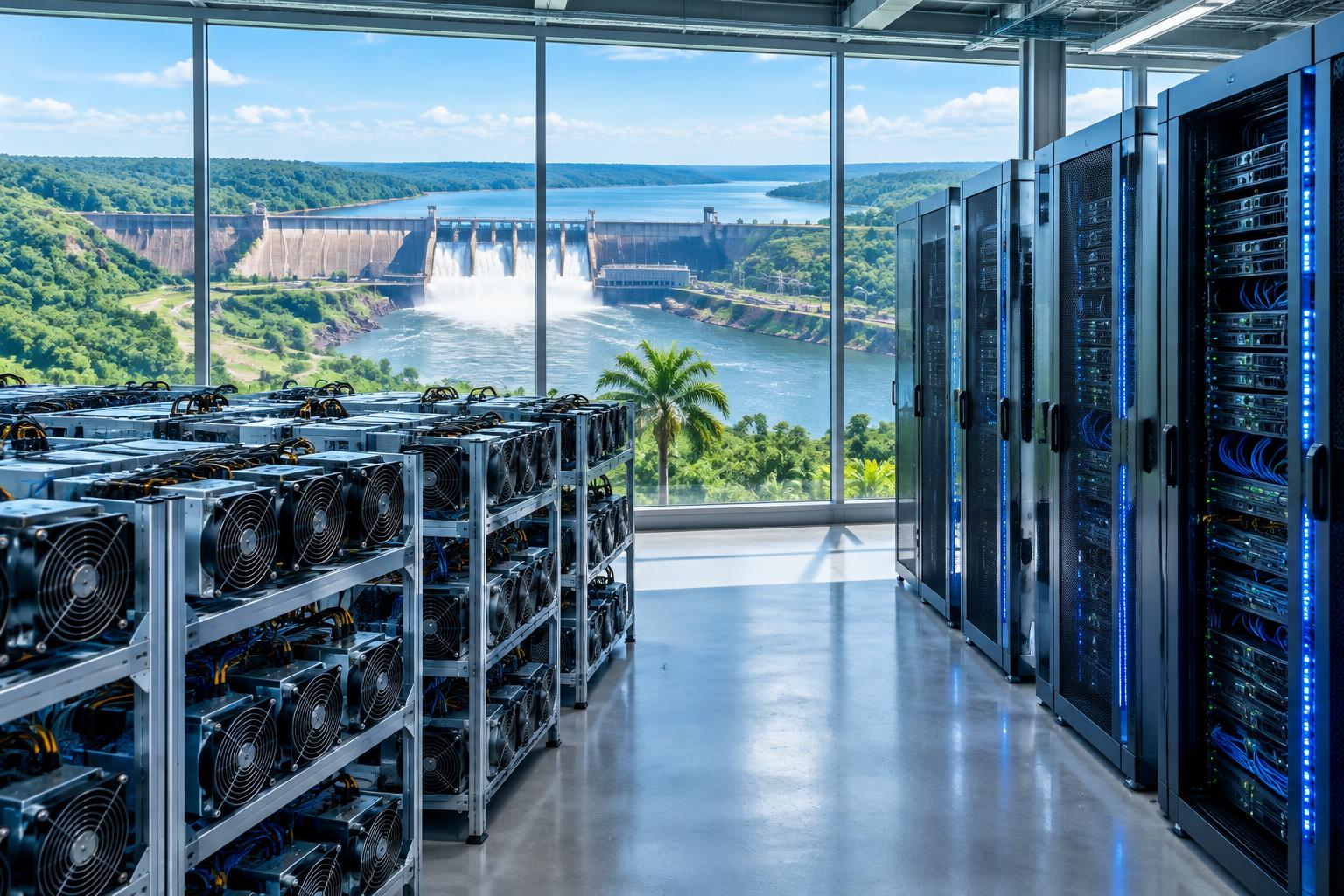
Across North America, Europe, and Latin America, publicly traded cryptocurrency miners and energy-rich jurisdictions are undergoing a rapid operational pivot. With AI hyperscalers competing aggressively for high-voltage grid connections and renewable power capacity, energized mining facilities have become prime real estate for high-performance computing (HPC) retrofits.
- Superior Unit Economics: Unlike Bitcoin mining—where profit margins fluctuate alongside coin prices and network difficulty—long-term AI cloud and GPU hosting contracts offer predictable, multi-year recurring revenue per megawatt consumed.
- Balance Sheet Restructuring: Leading mining operators have increasingly liquidated portions of their crypto treasuries to fund AI data center buildouts and pay down debt, signaling to equity investors a strategic transition from pure-play crypto exposure to hybrid digital infrastructure.
- Grid Prioritization: Energy utilities in power-surplus regions are steadily favoring long-term AI compute commitments over speculative proof-of-work operations, accelerating the migration of global hash rate toward off-grid and flare-gas energy sources.
Market Trend 2: Institutional Tokenization and Regulated Stablecoin Rails
While physical compute shifts toward AI, blockchain adoption on Wall Street is maturing around regulated settlement rails, tokenized treasuries, and compliant digital dollars. Following clearer federal stablecoin frameworks and institutional custody standards, financial institutions are moving beyond pilot programs into live production environments.
| Sector Focus | Legacy Market Narrative | Emerging Market Trend |
|---|---|---|
| Digital Infrastructure | Standalone Bitcoin mining farms | Hybrid AI/HPC data centers leveraging existing power substations |
| Capital Markets | Speculative retail token trading | Tokenized U.S. Treasuries, money market funds, and private credit |
| Payment Rails | Unregulated offshore stablecoins | Reserve-backed, bank-compliant stablecoins for cross-border settlement |
| Security & Governance | Isolated smart contract audits | AI-assisted threat detection and post-quantum cryptographic planning |
Market Trend 3: AI Agents and Decentralized Verification
A third convergence point gaining traction among venture capital and enterprise developers involves using blockchain rails to verify data provenance and execute autonomous machine-to-machine payments:
- Verifiable Data and Provenance: As synthetic AI-generated media proliferates, cryptographic signatures and immutable ledgers are increasingly deployed to authenticate original datasets, model weights, and enterprise content.
- Autonomous Micro-Transactions: Because autonomous AI agents cannot open traditional bank accounts, developers are integrating programmable stablecoin wallets that allow software agents to pay for API calls, cloud compute, and data feeds in real time.
- Systemic Risk Scrutiny: At the same time, central banks and financial regulators—including the Federal Reserve—have flagged concentrated AI model dependencies and algorithmic market correlation as top systemic priorities, driving parallel demand for transparent, auditable infrastructure.
Market Outlook
For investors and enterprise leaders, the convergence of AI and blockchain is no longer viewed as a speculative crossover theme. Instead, the two technologies are forming complementary layers of modern digital infrastructure: AI drives unprecedented demand for compute, data, and automation, while blockchain provides the programmable settlement, asset tokenization, and cryptographic verification layers required to scale them globally.
Sources and editorial context
Sources: Compiled from institutional market disclosures, Federal Reserve financial stability briefings, S&P Global Market Intelligence, CoinDesk, and Bloomberg, as supplied with the submitted article. Specific source links and disclosure dates were not provided; MediaPull has not independently verified the reported trends or regulatory claims. Consult original disclosures before making investment decisions. The cover is a conceptual illustration, not a photograph of a reported facility.
Tags: #AI #Blockchain #CryptoNews #TechTrends #Tokenization #AIDataCenters #FinTech #MarketAnalysis
For informational purposes only. This article is not financial advice.
Comments (0)
Loading comments…