Sam Altman Claims PC Owners are "Hogging" Global RAM — and the Internet Responded with Memes
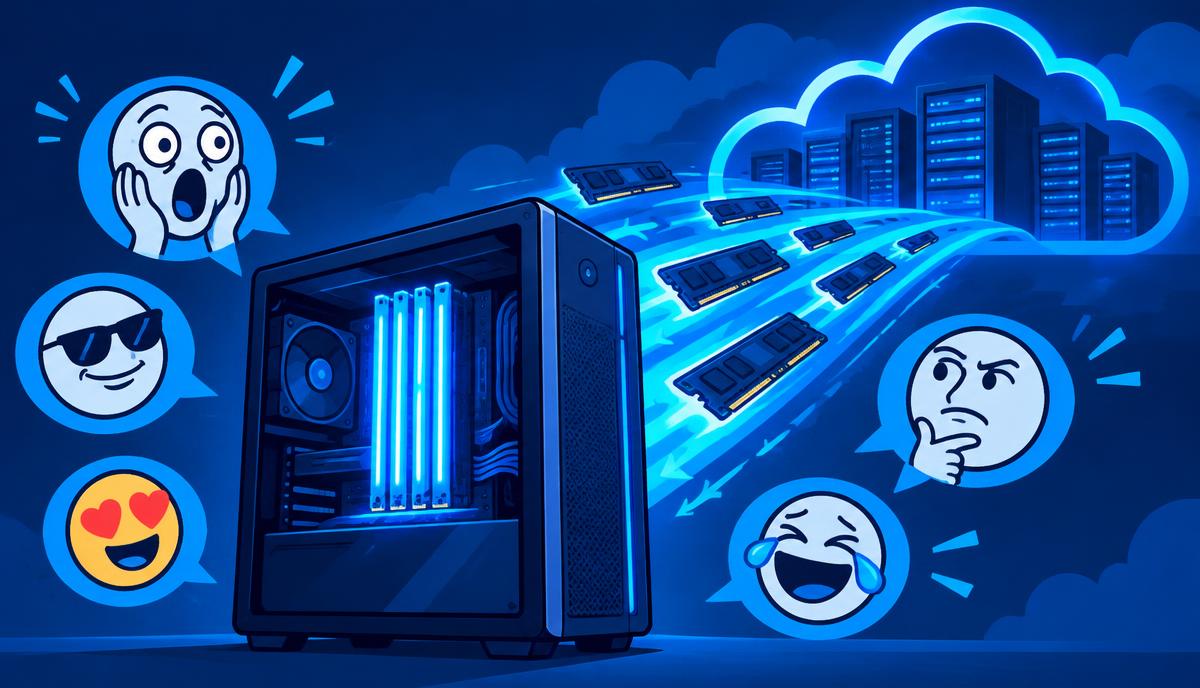
OpenAI CEO Sam Altman suggested that putting DRAM in personal computers is inefficient during the global chip shortage, arguing scarce memory belongs in cloud AI data centers. PC builders, gamers, and Elon Musk responded with a wave of memes.
Overview
SAN FRANCISCO — OpenAI CEO Sam Altman has stirred up a fresh wave of online debate after suggesting that allocating dynamic random-access memory (DRAM) to personal computers is inefficient during an ongoing global chip shortage. According to Altman, scarce memory resources would be better utilized inside cloud AI data centers rather than sitting underutilized in home desktop setups and laptops.
What Did Sam Altman Say About RAM?
During an appearance on the Cheeky Pint podcast, Altman addressed the mounting supply constraints in the semiconductor memory market. He argued that consumer devices only utilize their memory chips a small fraction of the time, making local hardware hoarding counterproductive for global computing capacity.
"From a global allocation perspective, actually, it's quite terrible to have everybody have a bunch of the world's limited supply of DRAM sitting in their own computer and being used 5 percent of the time," Altman stated. "You want maximum utilization in the cloud if you're trying to deal with this very supply-constrained environment."
Altman's comments come at a time when the rapid expansion of AI infrastructure has driven massive demand for high-bandwidth memory (HBM) and DRAM, driving up costs for everyday consumer electronics and computer parts.
PC Enthusiasts Push Back with Endless Memes
Unsurprisingly, the internet responded with swift skepticism and humor. PC builders, gamers, and tech enthusiasts quickly turned social media platforms into a battlefield of memes mocking the idea of surrendering local hardware for the sake of centralized cloud data centers.
Many users posted jokes about hiding their 16GB, 32GB, and 64GB RAM sticks from OpenAI's data collection sweeps, while others used dramatic pop-culture references. One widely circulated meme adapted a scene from Quentin Tarantino's Inglourious Basterds featuring an officer asking, "You are withholding DRAM from the cloud, are you not?" Another popular reply read: "Tell Sam Altman I use 64GB of RAM to play RollerCoaster Tycoon. I want him to know it was me."
The controversy gained further momentum when Elon Musk weighed in on X (formerly Twitter). Replying to the viral memes, Musk defended consumer hardware ownership, suggesting that individual users deserve access to dedicated local memory rather than funneling all global supply into AI server farms.
The Growing Tension Over AI Hardware Supply
While Altman's comments focused on maximum global computing efficiency, they highlight an underlying tension in the technology industry:
- Supply Chain Strain: The relentless demand for hardware driven by large language models (LLMs) has forced chip manufacturers to shift capacity toward enterprise-grade AI memory, driving up component costs for average consumers.
- Local vs. Cloud AI: While tech giants push users toward cloud-subscription models, a growing community of developers prefers running open-weight AI models locally on their own machines for privacy, offline access, and zero subscription costs.
- Market Outlook: Analysts predict that memory shortages driven by AI data centers could persist for years, keeping retail hardware prices elevated across laptops, smartphones, and custom PC components.
The Bottom Line
Despite the serious economic implications for the tech industry, PC builders remain firm on one point: their RAM stays in their rigs.
Sources
Compiled from reporting by Mashable, India Today, PCMag, and TechTimes.
Comments (0)
Loading comments…