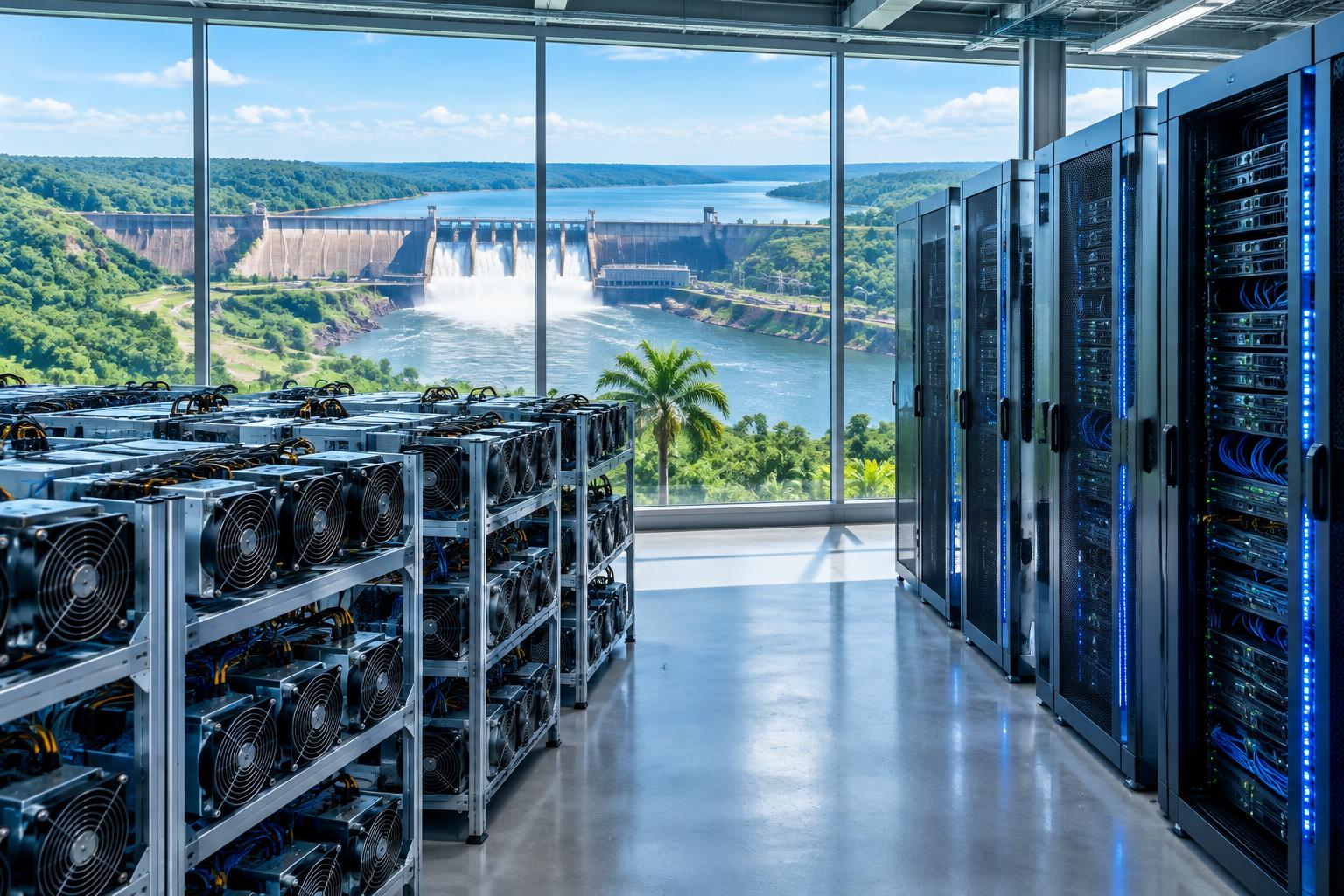
Finnish Startup Turns Bitcoin Miners into Free Home Heating Systems—as Long as BTC Holds Above $70,000
A submitted report on SunBit's 'Bitcoin Boiler' deployments in Nokia, Finland, where liquid-cooled mining rigs heat homes — profitable only while Bitcoin stays above $70,000. Claims are unverified.
Editorial note
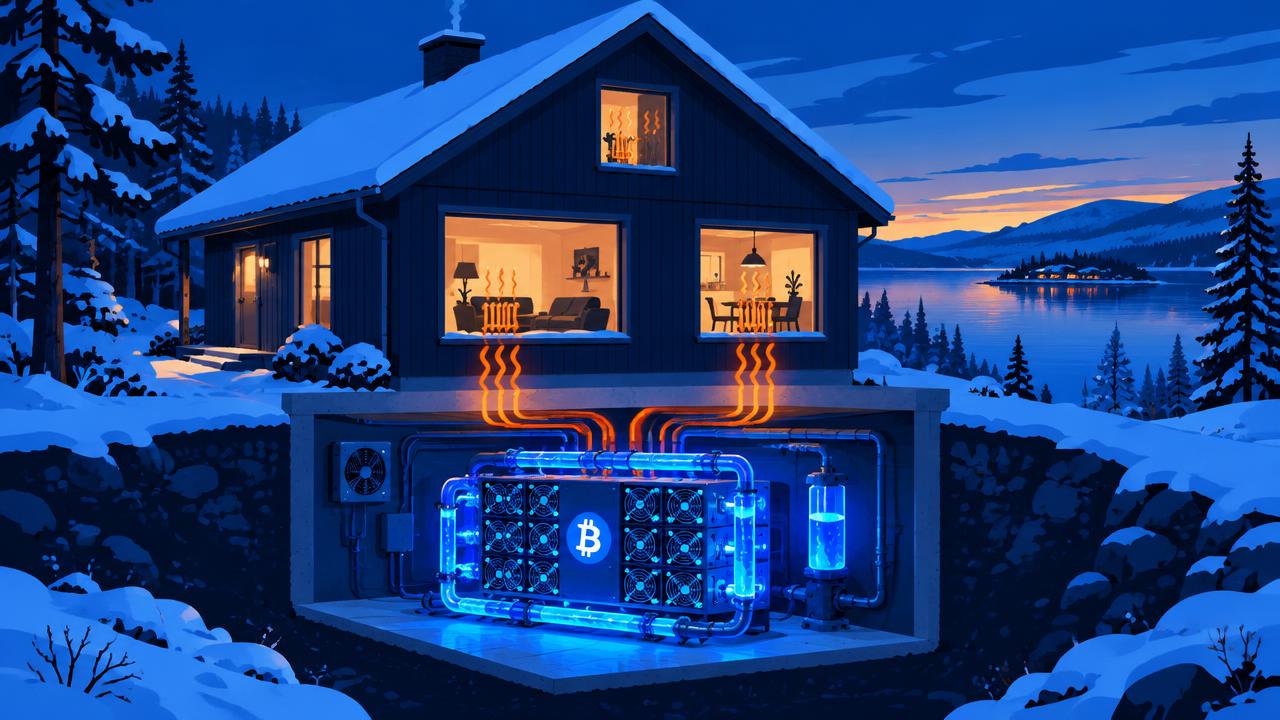
This article was prepared by the MediaPull Editorial Team from a submitted report. MediaPull has not independently verified the company, deployments, energy figures, mining yields, or price thresholds described below. The source names were supplied with the report, but no specific article links were provided. Check official disclosures and reliable reporting before relying on these claims. The cover is a conceptual illustration, not a photograph of the reported systems.
Heat from computation in Nokia, Finland
In the icy municipality of Nokia, Finland, a tech-driven home heating solution is turning computational waste into household warmth. Finnish startup SunBit has reportedly deployed roughly 30 custom-built "Bitcoin Boiler" systems across local residences, using specialized liquid-cooled Bitcoin mining rigs to supply radiant central heating and hot water to homeowners.
Under current market conditions, the dual-purpose setup offers a unique trade-off: as long as Bitcoin stays above $70,000, the value of the mined cryptocurrency completely offsets the home's electricity bill, yielding virtually free heat.
How the "Bitcoin Boiler" works
Instead of traditional electric heat pumps or oil burners, SunBit installs high-performance mining rigs—such as Bitmain's water-cooled Antminer S21 XP Hydro—inside sound-insulated basements or utility rooms.
- Heat transfer: the specialized hardware processes complex cryptographic algorithms 24/7, generating significant thermal output. The liquid-cooling loop captures this byproduct heat and channels it directly into the home's floor radiators and water heaters.
- Energy consumption: a typical unit running at roughly 5.3 kilowatts consumes around 46,400 kilowatt-hours (kWh) of power per year, translating to an annual electricity expense of about $5,200 (at regional power rates of ~$0.11/kWh).
- Crypto yield: operating continuously, a single high-efficiency unit generates roughly one-twelfth of a Bitcoin per year. At current Bitcoin valuations (above $80,000), the rewards net approximately $6,100 to $6,800 annually (depending on service fee structures), leaving homeowners with zero net heating costs and a slight profit buffer.
The economics: price floors and the 2028 halving
While the system replaces expensive district heating or heating oil—saving homeowners thousands of dollars in utility expenses—the financial model relies heavily on network metrics and market trends:
- The $70,000 break-even floor: if Bitcoin's price dips below the $70,000 threshold (or if global network mining difficulty increases sharply), the mined crypto revenue will no longer fully cover the power bill, turning the "free" heating system back into an out-of-pocket utility expense.
- Upfront hardware costs: setting up a hydro-mining heat system requires an initial capital investment between $20,000 and $31,000, yielding an estimated payback timeline of three to six years.
- The 2028 halving challenge: because Bitcoin block rewards automatically cut in half every four years, the upcoming 2028 halving will drop block rewards from 3.125 BTC to 1.5625 BTC. To maintain true zero-cost heating post-2028 without network difficulty adjustments, Bitcoin's market price would need to rise above roughly $131,000.
Expanding micro-district heating networks
SunBit's residential deployments reflect a growing trend across Nordic countries toward localized waste-heat recovery. Larger institutional operators in Finland—such as Marathon Digital Holdings (MARA)—have similarly launched pilot programs feeding waste heat from industrial-scale mining farms into municipal district heating networks, warming tens of thousands of local residents.
As energy efficiency regulations tighten across Europe, sub-zero Nordic regions are increasingly eyeing computational infrastructure as an economic alternative to traditional municipal heating.
Sources
Compiled from CoinDesk reporting, SunBit technical disclosures, and Finnish energy market data (as supplied with the submitted report; specific links were not provided).
Frequently asked questions
For informational purposes only. This article is not financial advice.
Comments (0)
Loading comments…