Artificial Intelligence Surges to Top Risk for U.S. Financial System in Latest Federal Reserve Survey
A submitted report describes AI as the leading concern in a Federal Reserve survey, highlighting algorithmic trading, tech valuations and cybersecurity risks to financial stability.
Editorial note
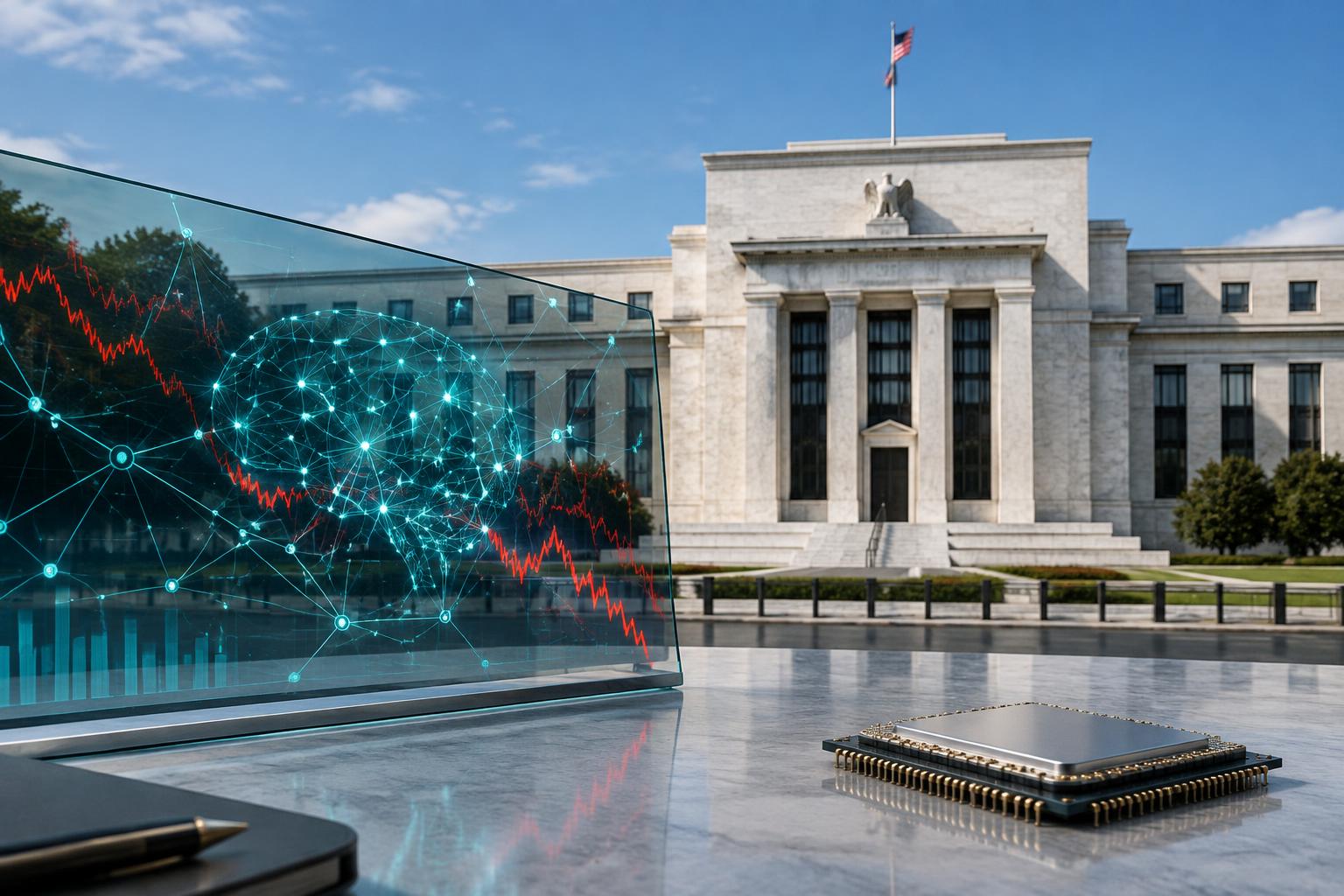
This article was prepared by the MediaPull Editorial Team from a submitted report. MediaPull has not independently verified the survey rankings, report edition or regulatory statements described below. Source names were supplied with the report, but no specific report links were provided. The rankings reflect the submitted report's account of participants' perceived risks, not a confirmed Federal Reserve forecast. Consult the original Financial Stability Report before relying on these claims. The cover is a conceptual illustration, not a photograph of a reported event.
AI concerns rise in the financial stability debate
WASHINGTON — Artificial intelligence (AI) has rapidly emerged as the number-one perceived threat to the stability of the U.S. financial system, according to the Federal Reserve’s latest semiannual Financial Stability Report. Market participants, academics, and financial executives surveyed by the central bank ranked AI-related disruptions above persistent inflation, geopolitical conflicts, and sovereign debt concerns.
AI Jumps to the Forefront of Systemic Risk
In the Federal Reserve’s bi-annual survey of Wall Street economists, asset managers, and policy experts, concerns over artificial intelligence saw the sharpest spike of any risk category—marking a dramatic shift from previous editions where macroeconomic tightening and commercial real estate dominated the outlook.
Respondents highlighted several interconnected channels through which rapid AI adoption could destabilize global financial markets:
- Algorithmic Herding and Flash Crashes: As major asset managers and high-frequency trading desks rely on similar foundational AI models and data pipelines, synchronized trading signals could amplify market volatility, trigger sudden liquidity dry-ups, and accelerate flash crashes during periods of stress.
- Tech Valuation Bubbles and Concentration Risk: Heavy capital expenditure by mega-cap technology firms and concentrated equity market gains tied to AI infrastructure have raised fears of a sharp valuation correction if enterprise AI monetization falls short of expectations.
- Cybersecurity and Operational Vulnerabilities: Financial institutions warned that AI-powered cyberattacks, automated fraud, and deepfake social engineering pose escalating operational threats to banking networks and payment clearing systems.
- Labor Market and Credit Disruptions: Economists noted that rapid white-collar automation could disrupt consumer spending patterns and pressure loan performance across consumer credit and corporate debt portfolios.
How the Fed’s Risk Rankings Have Shifted
Alongside the rise of artificial intelligence, the Federal Reserve’s report detailed broader vulnerabilities across the U.S. financial landscape:
| Risk Category | Key Market Concern |
|---|---|
| 1. Artificial Intelligence (AI) | Algorithmic market correlation, tech valuation pullbacks, and AI-driven cyber threats |
| 2. Geopolitical Tensions | Middle East maritime friction, global trade fragmentation, and energy price shocks |
| 3. Persistent Inflation & Rates | Sticky service-sector inflation limiting central bank flexibility on interest rates |
| 4. Fiscal & Sovereign Debt | Rising U.S. federal deficits and Treasury market liquidity pressures |
| 5. Non-Bank Financial Leverage | High leverage among hedge funds and private credit institutions outside traditional banking oversight |
Regulatory Oversight and Market Outlook
While Federal Reserve officials acknowledged that artificial intelligence offers substantial long-term productivity gains for banking operations, risk modeling, and compliance, the central bank emphasized the need for heightened supervisory vigilance.
Regulators are increasingly scrutinizing third-party AI cloud dependencies and model risk management across systemically important financial institutions to ensure that automated efficiencies do not introduce hidden systemic fragility.
Sources
Compiled from the Federal Reserve Board Financial Stability Report, Reuters, Bloomberg, and Wall Street Journal market disclosures (as supplied with the submitted report; specific links were not provided).
Tags: #FederalReserve #ArtificialIntelligence #FinancialStability #WallStreet #Economy #MarketRisk #TechNews #FinanceNews
For informational purposes only. This article is not financial advice.
Comments (0)
Loading comments…