MediaPull.co
Google Uncovers Autonomous AI Hacking Framework with Russian-Language CodeHackers Inject Crypto-Stealing Malware Across 178 Major Websites, Including HSBC and LedgerAI and Blockchain Convergence Reshapes Global Markets as Compute Demand and Institutional Tokenization AccelerateArtificial Intelligence Surges to Top Risk for U.S. Financial System in Latest Federal Reserve SurveyBitcoin Miners Pay Paraguay $350 Million Annually, but AI Data Centers Are Pushing Them OutWall Street Shifts from Courtier to Co-Investor with Sovereign Wealth GiantsWhy the GENIUS Act's Stablecoin Protections Stop at the Edge of DeFi LendingBitcoin Decouples from Stock Rally as Institutional ETF Outflows and Miner Sales Weigh on PriceOil Prices Plunge Below $90 as Trump Signals Restraint on Further Middle East StrikesRegional Conflicts Strain Gulf Nations’ Ability to Meet COP31 Climate PledgesUAE AI-Energy Group AIQ Explores Early Commercial Deals to Enter U.S. MarketFinnish Startup Turns Bitcoin Miners into Free Home Heating Systems—as Long as BTC Holds Above $70,000Strong U.S. Payrolls Surge Dollar as U.S.–Iran Diplomatic Stalemate DeepensU.S. Treasury Moves to Sever Crypto Exchange MEXC from American Banking System Over $16 Billion in Illicit FlowsApple and Meta Reject OKX–ICE Tokenized Stock Initiative, Leaving Crypto-Native Firms in the SpotlightBitcoin Core Developer Proposes 'Quantum Landmines' to Deter Future Crypto ThievesGlobal Financial Shift: Bank of England Executes First Rate Hike in Three Years as Diplomatic Signals Emerge from US-Iran TalksDemocrats Retake Both Chambers of Congress as Fears of Escalation in U.S.–Iran Conflict EaseCFTC Faces Major Legal Challenge Over Single-Stock Perpetual Futures Following Crypto Derivatives ExpansionSam Altman Claims PC Owners are "Hogging" Global RAM — and the Internet Responded with MemesChina’s Communist Party Directs Anti-Corruption Investigators to Target Crypto and Blockchain OffensesTensions Escalating in Middle East: Maritime Conflicts Intensify Near Strait of Hormuz Following Leadership Shift in IranBinance Faces Historic $6.3 Billion Security Breach: Key Incident Details and Next StepsPolygon (POL) Redefines Global Payments Strategy Following Key AcquisitionsBinance Leads Q4 Market Resurgence as Tokenized Assets Reach $1B BenchmarkWhat Is Blockchain? A Plain-English Guide to How Crypto Networks WorkBitcoin vs Gold: Comparing Two Stores of Value
DeFi · Banking · SmartContracts · Yield

Decentralized Finance (DeFi) vs. Traditional Banking: Risks, Yields, and Structural Differences

DeFi replaces intermediaries with smart contracts, offering automated lending and liquidity pools. Here is how its yields and risks compare with insured banking.
MediaPull Editorial DeskUpdated November 5, 20264 min read
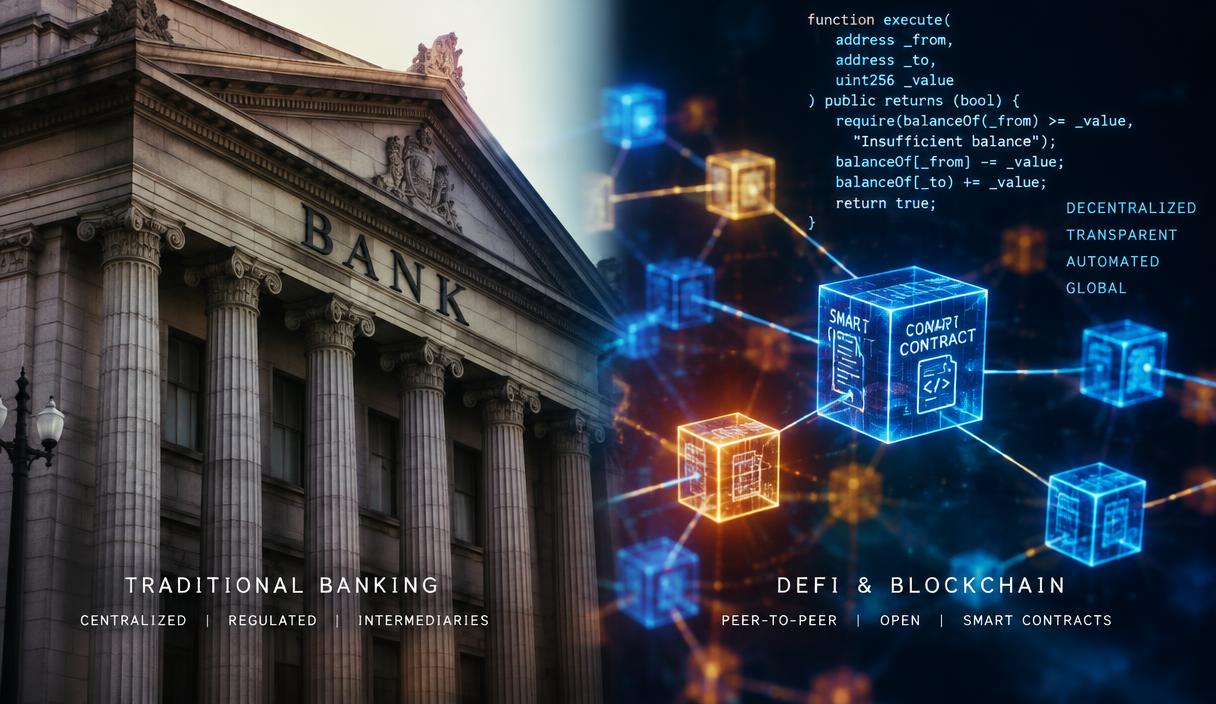
Illustration for Decentralized Finance (DeFi) vs. Traditional Banking: Risks, Yields, and Structural Differences

Two models of finance

Traditional banks act as trusted intermediaries: they hold deposits, assess borrowers and are supervised by regulators. Decentralized finance (DeFi) replaces many of those functions with open-source smart contracts running on public blockchains.

How DeFi works

Users interact directly with code rather than with a company.

  • Lending protocols: deposit assets to earn interest; borrow by posting over-collateralised crypto.
  • Decentralised exchanges: trade tokens against automated liquidity pools instead of an order book.
  • Liquidity provision: supply token pairs to a pool and earn a share of trading fees.

Where the yields come from

DeFi yields are generated by borrowing demand, trading fees and token incentives. Incentive-driven yields can be very high initially but often fall as rewards are reduced or token prices decline.

If you cannot identify where a yield comes from, you are probably the yield.

The risks compared

The structural differences translate into very different risk profiles.

Smart-contract risk

Bugs or exploits in code can drain funds instantly, and there is usually no central party to reverse the transaction.

Impermanent loss

Liquidity providers can end up with less value than if they had simply held their tokens when prices diverge sharply.

Regulatory and counterparty risk

Bank deposits in many countries are protected by insurance schemes such as the FDIC in the US. DeFi deposits have no equivalent government guarantee, and legal recourse is limited.

Making an informed choice

For emergency savings, insured bank accounts and money-market funds remain the prudent choice. Investors exploring DeFi should treat it as high-risk capital, use audited protocols, and size positions so a total loss would not derail their plans.

Frequently asked questions

For informational purposes only. This article is not financial advice.

Comments (0)

No account needed. Please be respectful — no email or personal details.

Loading comments…

Related articles