The Economics of Energy Transition: Financial Challenges of Renewable Energy Projects
Evaluating LCOE, upfront capital barriers and long-term ROI for solar, wind and hydrogen — and why financing structure decides which projects get built.
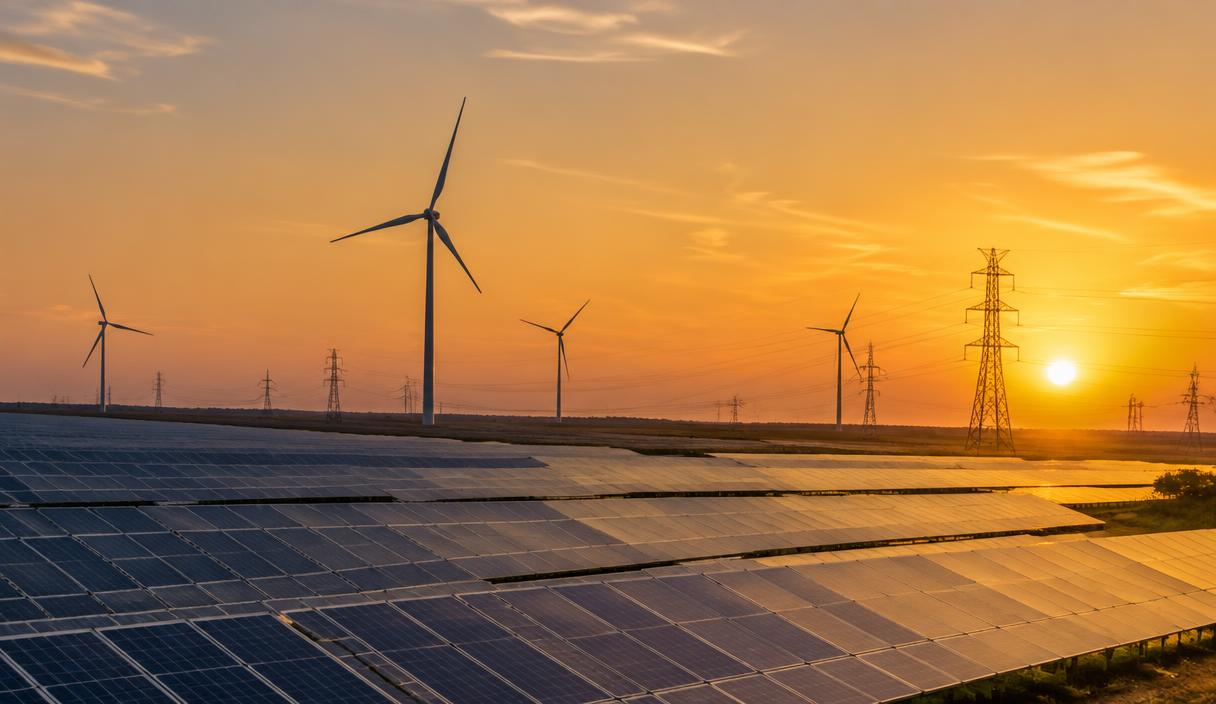
A capital-intensive transformation
Moving from fossil fuels to clean energy requires enormous upfront investment in generation, storage and grid modernisation. Unlike fossil plants, most renewable projects have low running costs but high initial capital expenditure.
Understanding LCOE
The levelised cost of electricity (LCOE) spreads all lifetime costs — construction, financing, operation and maintenance — over total expected output. It allows different technologies to be compared on a cost-per-megawatt-hour basis.
Utility-scale solar and onshore wind are now among the lowest-LCOE sources of new electricity in many regions.
For renewables, the fuel is free — the cost is almost entirely the cost of money.
The barriers to entry
Low LCOE does not guarantee a project gets built.
- Financing costs: higher interest rates raise LCOE significantly because so much cost is upfront.
- Grid connection: long queues and transmission constraints delay projects.
- Intermittency: storage or backup capacity adds system costs.
- Permitting and land acquisition timelines.
Technology profiles
Each technology carries a different risk-return profile.
Solar
Modular, quick to build and steadily cheaper; returns depend on sunshine and power-price agreements.
Wind
Offshore wind offers higher capacity factors but greater construction and supply-chain risk.
Green hydrogen
Promising for heavy industry and shipping, but still expensive and dependent on subsidies and cheap renewable power.
Evaluating long-term ROI
Investors model 20–30 years of cash flows, with long-term power purchase agreements providing revenue certainty. Small changes in the discount rate or capacity factor can swing returns substantially.
Frequently asked questions
For informational purposes only. This article is not financial advice.
Comments (0)
Loading comments…