24K vs. 22K vs. 18K Gold: Understanding Purity, Hallmarks, and Melt Value Calculations
Karat tells you how much of a gold item is actually gold. Compare 24K, 22K and 18K purity, read hallmarks correctly and calculate melt value step by step.
Introduction: why karat matters
Two gold rings of identical weight can differ in value by more than 25%. The reason is purity, expressed in karats. Pure gold is soft, so jewelers alloy it with copper, silver, zinc or palladium to add strength and change colour. Knowing exactly how much pure gold an item contains is the first step to judging a fair purchase price, insurance value or resale offer.
The karat system divides an item into 24 parts. 24-karat gold is essentially pure; 18-karat gold is 18 parts gold and 6 parts other metals, or 75% gold.
- Key takeaway: purity fraction = karat ÷ 24.
- Key takeaway: hallmarks such as 999, 916 and 750 state purity in parts per thousand.
- Key takeaway: melt value counts only pure gold content; buyers typically pay below it.
Comparing 24K, 22K and 18K
24K gold (999 or 999.9 fineness) is used for investment bars, many coins and traditional jewelry in parts of Asia and the Middle East. It is bright yellow but scratches and bends easily. 22K gold (916) is the standard for wedding and festive jewelry in India and the Gulf, balancing richness with durability. 18K gold (750) dominates fine jewelry in Europe and North America, especially pieces set with stones, and is available in yellow, white and rose shades.
Colour is another practical difference. White gold is usually 18K or 14K alloyed with palladium or nickel and often plated with rhodium, which wears over time. Rose gold gets its tint from a higher copper share. Neither colour changes the gold content implied by the karat, so an 18K white ring and an 18K yellow ring of equal weight hold the same amount of gold.
| Karat | Gold content | Hallmark | Typical use | Durability |
|---|---|---|---|---|
| 24K | 99.9% | 999 | Bars, coins, some jewelry | Soft |
| 22K | 91.6% | 916 | Traditional jewelry | Moderate |
| 21K | 87.5% | 875 | Gulf jewelry | Moderate |
| 18K | 75.0% | 750 | Fine and gem-set jewelry | Good |
| 14K | 58.5% | 585 | Everyday jewelry | High |
Reading hallmarks correctly
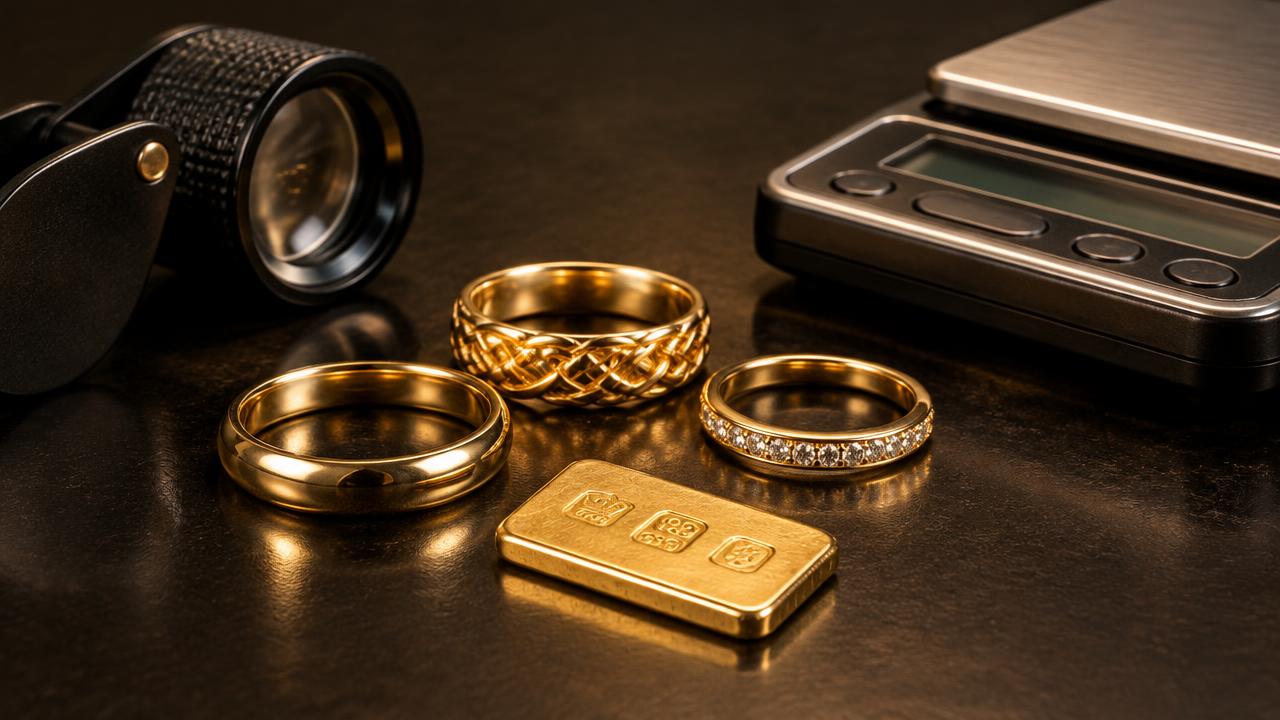
A hallmark is a set of stamps certifying purity. Many countries require independent assay offices to test and mark items before sale. A complete mark often includes a fineness number, a maker's or sponsor's mark, an assay office symbol and sometimes a date letter. In India, BIS hallmarking shows a purity grade such as 22K916 plus a unique identification code; in the United Kingdom, a crown or Britannia symbol may accompany the millesimal number.
Be cautious with marks such as 'GP', 'GF' or 'HGE', which indicate gold plating, gold-filled or heavy gold electroplate rather than solid gold. A karat stamp without an assay mark is a claim by the maker, not an independent certification.
Calculating melt value: a worked example
Melt value is the worth of the pure gold inside an item at today's spot price. Take a 10-gram 22K bracelet when spot gold is $2,400 per troy ounce. First convert the spot price to grams: $2,400 ÷ 31.1035 ≈ $77.16 per gram of pure gold. Next find pure content: 10 g × 0.916 = 9.16 g. Multiply: 9.16 × $77.16 ≈ $706.79.
The same weight in 18K contains 7.5 g of gold, worth about $578.70. In 24K it holds 9.99 g, worth about $770.83. Jewelry retail prices add making charges, design premiums and taxes; scrap buyers usually offer 70% to 95% of melt value to cover refining and margin.
Melt value = Weight (g) × (Karat ÷ 24) × Spot price per gram
22K: 10 g × 0.916 × $77.16 ≈ $706.79
18K: 10 g × 0.750 × $77.16 ≈ $578.70
Practical tips before buying or selling
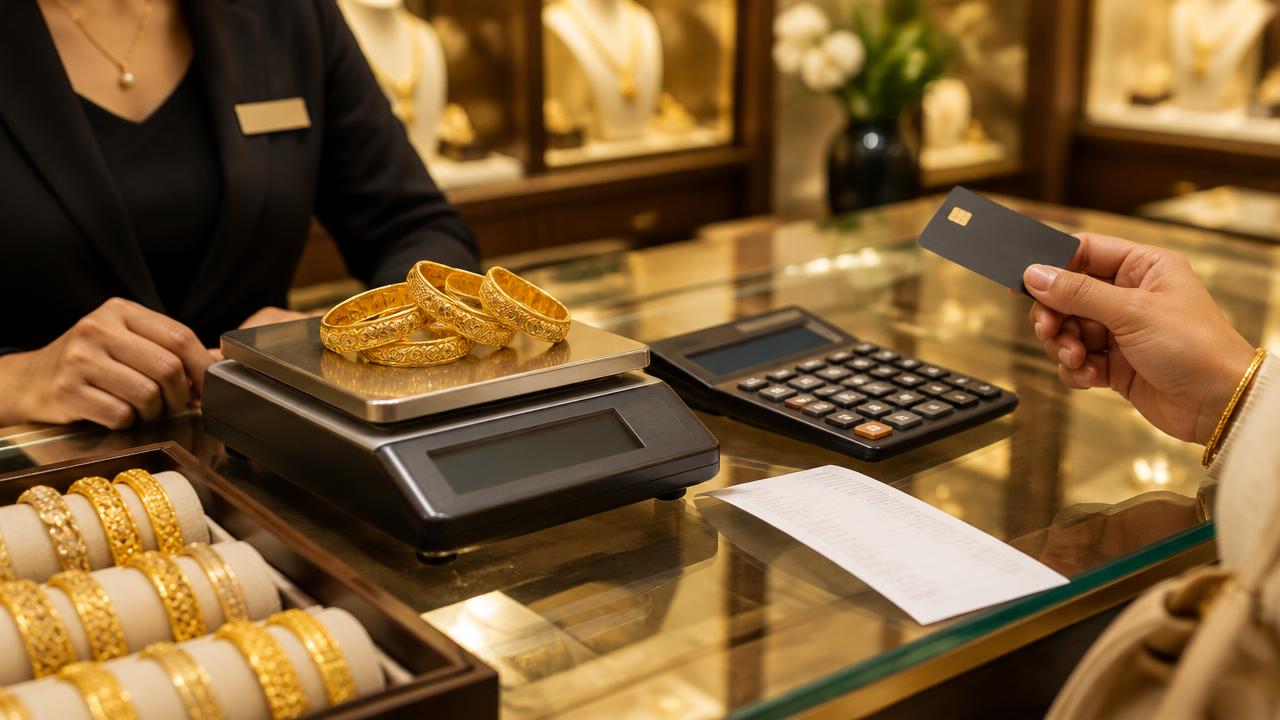
Weigh items on a calibrated scale, ideally to two decimal places, and exclude stones, which add weight but no gold value. Ask the seller to separate the gold price from making charges. When selling, obtain several quotes and ask each buyer which percentage of melt value they pay. Keep receipts and hallmark certificates, as they speed up resale and insurance claims.
For high-value pieces, an independent test is worth the small fee. Jewelers and assay offices can use X-ray fluorescence analysers that measure composition without damaging the item, while acid testing on a touchstone remains a common low-cost check. Hollow chains and bangles deserve extra scrutiny, because they can look heavy while containing far less metal than solid pieces of the same size.
Conclusion
Karat, hallmark and weight together determine what a gold item is intrinsically worth. 24K maximises gold content, 22K suits traditional jewelry, and 18K offers durability for everyday wear. Run the melt-value calculation before every transaction so premiums and discounts become visible. For a deeper look at pricing jewelry, see our gold purity and valuation guide.
For informational purposes only. This article is not financial advice.
Comments (0)
Loading comments…