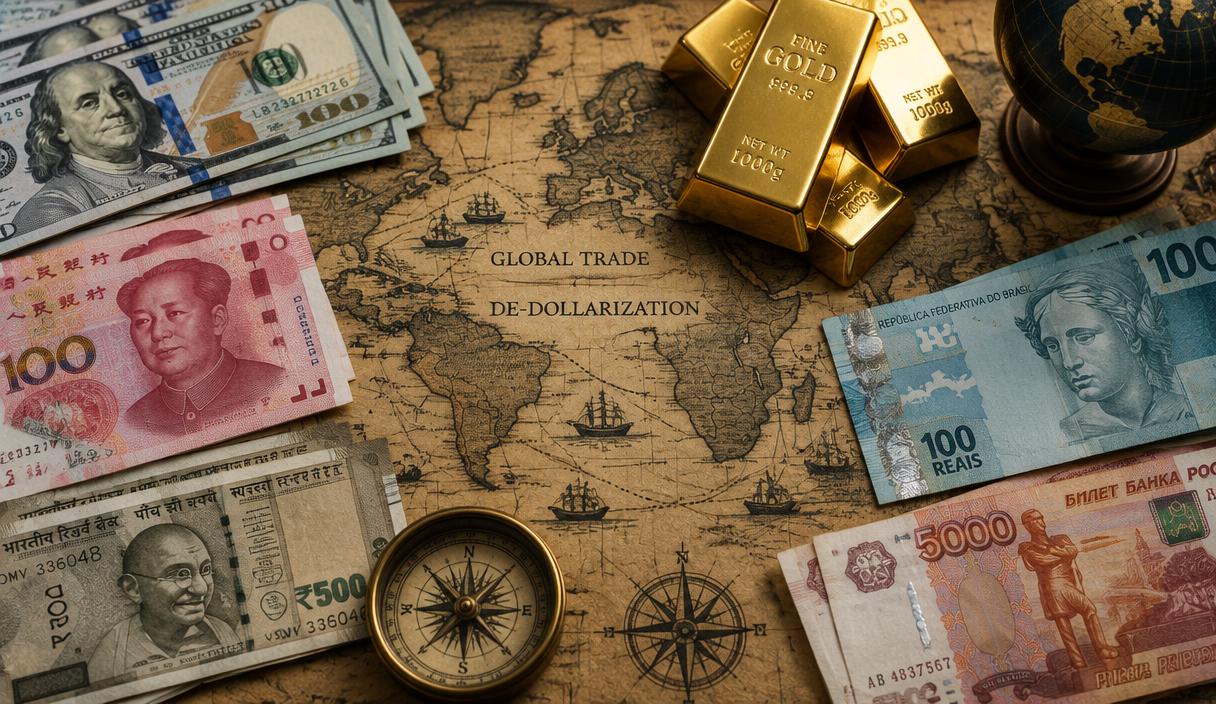
Why Central Banks Are Buying Gold — and How It Shapes Global Prices
Central banks have bought record amounts of gold in recent years. See why reserve managers want bullion and how official demand affects the price.
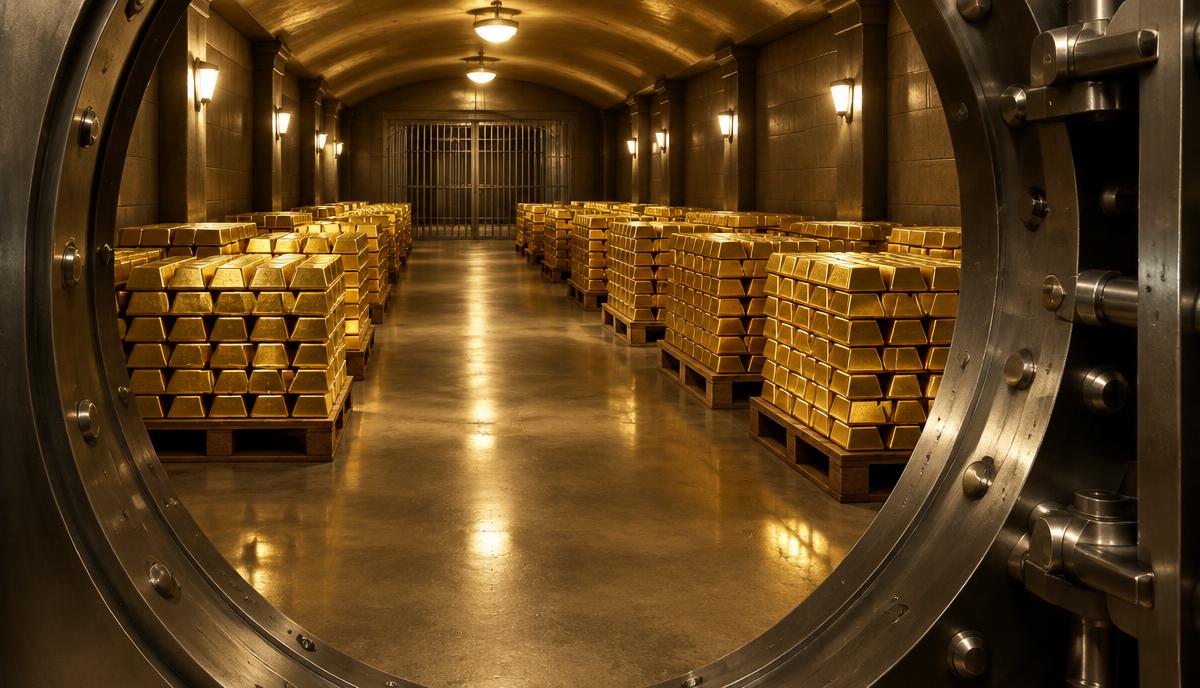
A quiet shift in reserve management
For much of the 1990s and early 2000s, central banks in Western Europe were net sellers of gold, viewing it as a barren asset that paid no interest. That trend reversed after the 2008 financial crisis. Since then official institutions have been consistent net buyers, and according to World Gold Council data, central-bank purchases exceeded 1,000 tonnes in each of 2022, 2023 and 2024 — roughly double the average of the previous decade.
This official demand has become one of the most important structural supports for the gold price, alongside investment and jewelry demand.
- Key takeaway: central banks have shifted from net sellers to large, persistent net buyers of gold.
- Key takeaway: the main motives are diversification, sanctions risk and confidence in a non-sovereign asset.
- Key takeaway: official buying tends to be price-insensitive, which can cushion gold during sell-offs.
Why reserve managers want gold
Central banks hold reserves to defend their currencies, pay for imports and reassure investors. Traditionally those reserves were concentrated in US Treasury securities and other major-currency bonds. Gold offers characteristics that bonds cannot.
- No counterparty risk: physical gold held at home is no one else's liability.
- Sanctions resilience: the 2022 freezing of Russian foreign-exchange reserves showed that bond and deposit holdings can be immobilized.
- Diversification: gold has historically had low correlation with the US dollar and government bonds.
- Long-term value: gold has preserved purchasing power over centuries of currency debasement.
Who is buying
Purchases have been concentrated among emerging-market central banks whose gold holdings were small relative to their total reserves. Advanced economies such as the United States, Germany, Italy and France already hold large shares of their reserves in gold and have been largely inactive.
| Group | Typical gold share of reserves | Recent behaviour |
|---|---|---|
| United States, Germany, Italy, France | Very high (often above 60%) | Holding steady |
| China, India, Turkey, Poland | Low to moderate | Active buyers in recent years |
| Many smaller emerging markets | Low | Gradual accumulation |
How official demand affects prices
Annual gold mine supply is roughly 3,500 tonnes. When central banks absorb 1,000 tonnes or more, they take close to a third of new production off the market. Because reserve managers buy for strategic reasons over many years, their demand is relatively insensitive to short-term price moves, unlike speculative investors who sell when prices fall.
This helps explain why gold reached record highs in 2024 and 2025 even during periods when higher real interest rates would traditionally have weighed on the price. Official buying partly offset the outflows from Western investment funds.
Share of mine supply absorbed = Central-bank purchases ÷ Annual mine supply
Example: 1,000 t ÷ 3,500 t ≈ 29%
Risks to the trend
Official demand is not guaranteed. A central bank facing a currency crisis may sell gold to raise dollars, as Turkey did at times in 2023. Policy priorities can change with new leadership, and price spikes may slow purchases at the margin. Investors should treat central-bank demand as a supportive backdrop, not a floor under the price.
Gold, the dollar and de-dollarization
Central-bank gold buying is often linked to the broader debate about de-dollarization — the idea that countries will gradually reduce their reliance on the US dollar for trade and reserves. The dollar still accounts for well over half of disclosed global foreign-exchange reserves, and no other currency comes close to matching the depth of US Treasury markets. Rapid change is therefore unlikely.
What is changing is the margin. Reserve managers that once held almost nothing but dollar and euro bonds are adding a neutral asset that cannot be frozen by a foreign government. Even a small shift in allocation matters: global official reserves total roughly $12 trillion, so moving one percentage point into gold implies around $120 billion of purchases — more than a year of typical official demand at recent prices.
For investors, the implication is that gold's price drivers have broadened. Historically, Western investment flows and real interest rates explained most moves. Today, the reserve decisions of emerging-market central banks in Asia, the Middle East and Eastern Europe carry growing weight, and their reporting is often delayed or incomplete, which can make price moves harder to explain in real time.
Conclusion
The return of central banks as major gold buyers reflects a deeper rethink of reserve safety in a more fragmented world. For individual investors, it reinforces gold's role as a diversifier, while reminding them that prices still respond to interest rates and the dollar. To understand that second force, read our explainer on real interest rates and gold, or explore our guide to gold versus silver as inflation hedges.
For informational purposes only. This article is not financial advice.
Comments (0)
Loading comments…