Gold vs. Silver as Inflation Hedges: What the Data Shows
Gold and silver are both called inflation hedges, but they behave very differently. Compare volatility, demand drivers and the gold-to-silver ratio.
Two metals, one reputation
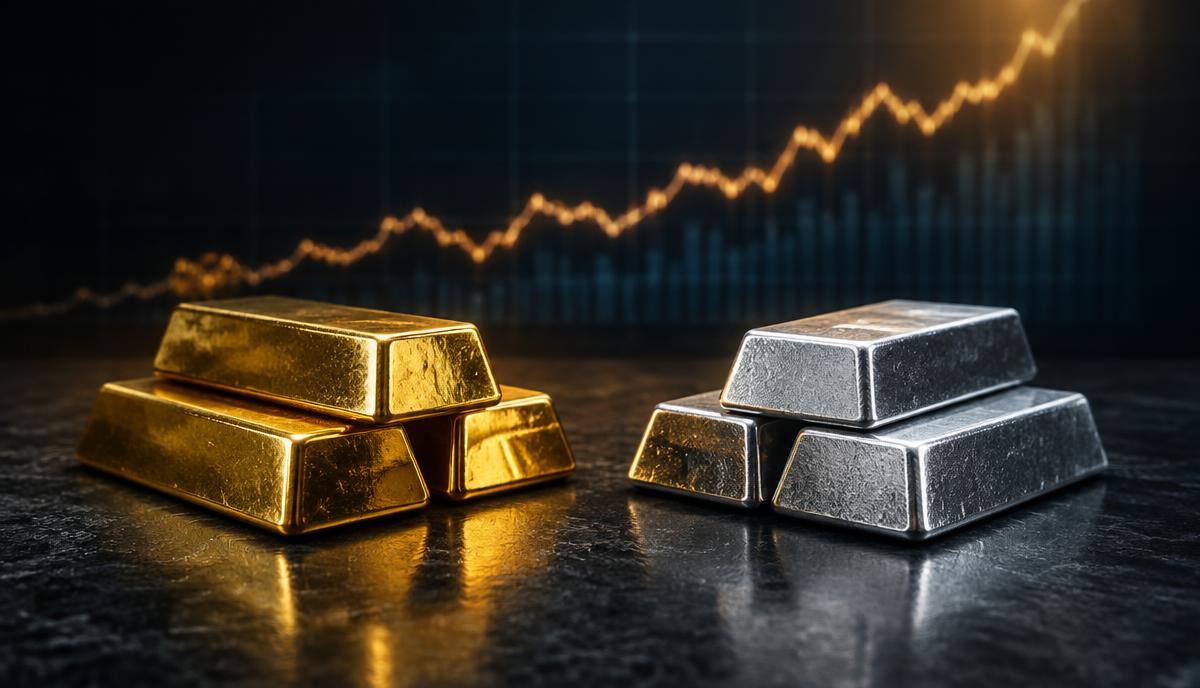
Whenever consumer prices rise faster than expected, investors start asking the same question: should I own gold, silver, or both? Both metals have served as money for thousands of years, both are priced in US dollars per troy ounce, and both tend to attract buyers when confidence in paper currencies weakens. Yet treating them as interchangeable is one of the most common mistakes in precious-metals investing.
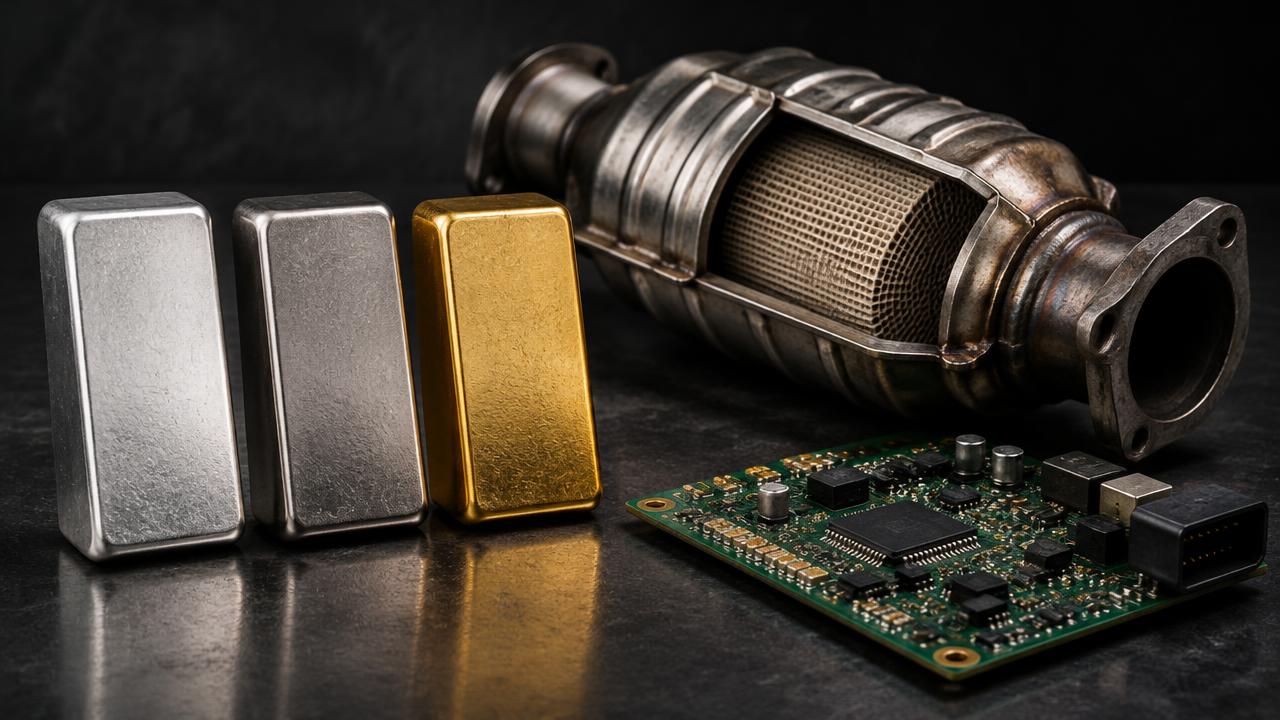
The difference comes down to who buys each metal and why. Gold is overwhelmingly a monetary and investment asset. Silver is roughly half investment metal and half industrial input, which gives it a very different personality during booms, recessions and inflationary episodes.
- Key takeaway: gold is primarily a store of value; silver is a hybrid of store of value and industrial commodity.
- Key takeaway: silver typically moves more than gold in both directions, so it hedges inflation less smoothly.
- Key takeaway: the gold-to-silver ratio helps investors judge which metal looks relatively cheap.
Where demand comes from
Gold demand is dominated by jewelry, bars and coins, exchange-traded funds and central-bank reserves. Industrial uses, mainly electronics and dentistry, account for well under a tenth of annual demand. Because so much gold is held as wealth, its price responds mostly to real interest rates, the dollar and investor fear.
Silver is different. Solar panels, electronics, brazing alloys, medical applications and electric vehicles together consume around half of each year's supply. When factories are busy, silver demand rises; when manufacturing slows, it falls. That industrial link can help during reflationary booms, when inflation and growth rise together, but it can hurt during stagflation or recession, when inflation persists while industrial activity contracts.
Volatility and the gold-to-silver ratio
Silver's market is far smaller than gold's, so the same flow of money moves its price further. Historically, silver's annual price swings have often been one and a half to two times larger than gold's. That makes silver attractive to traders seeking leverage to a precious-metals rally, but less comfortable for savers who want a steady hedge.
The gold-to-silver ratio — the number of ounces of silver needed to buy one ounce of gold — summarizes the relationship. Over the past few decades it has mostly ranged between about 40 and 100. A high ratio suggests silver is cheap relative to gold; a low ratio suggests the opposite. The ratio is a relative-value signal, not a timing tool, and it can stay at extremes for years.
| Characteristic | Gold | Silver |
|---|---|---|
| Main demand source | Investment, jewelry, central banks | Industry (≈50%), investment, jewelry |
| Typical volatility | Lower | Higher (often 1.5–2× gold) |
| Reaction to recession | Often resilient | Often weaker as industrial demand falls |
| Storage cost per $10,000 | Small (compact) | Larger (about 80× the volume at a ratio of 80) |
| Central-bank holdings | Large and growing | Negligible |
A worked example: hedging $10,000
Consider an investor who puts $10,000 into precious metals when gold trades at $2,400 per ounce and silver at $30, a gold-to-silver ratio of 80. The gold buys about 4.17 ounces; the silver buys about 333 ounces.
Now assume a period of high inflation in which gold rises 20% and silver, behaving like a higher-beta metal, rises 35%. The gold position grows to $12,000 and the silver position to $13,500. But in a scenario where inflation coincides with a manufacturing slowdown, gold might rise 10% while silver falls 5%: $11,000 versus $9,500. The silver holder carries more upside and more downside for the same inflation outcome.
Position value = Ounces held × New price per ounce
Gold: 4.17 oz × ($2,400 × 1.20) ≈ $12,000
Silver: 333 oz × ($30 × 1.35) ≈ $13,500
Building a practical allocation
Most portfolio research that includes precious metals uses modest weights, commonly in the range of 5% to 10% of total assets. Within that slice, many long-term investors keep gold as the core holding because of its lower volatility and deep liquidity, and add a smaller silver allocation for growth sensitivity. Others rebalance between the two when the gold-to-silver ratio reaches historical extremes.
Whatever the split, costs matter. Physical silver usually carries higher dealer premiums as a percentage of value, and its bulk makes storage more expensive. Exchange-traded products reduce those frictions but introduce fund fees and counterparty considerations.
Conclusion
Gold and silver both offer protection against the erosion of paper money, but they do not offer the same protection. Gold behaves like monetary insurance: steadier, widely held by central banks, and often resilient in downturns. Silver behaves like gold with an industrial engine attached: more explosive in reflationary booms and more fragile in recessions. Decide what kind of inflation you are worried about, size the position to your risk tolerance, and review the mix periodically. For a broader look at how monetary conditions move metals, read our guide to real interest rates and gold.
For informational purposes only. This article is not financial advice.
Comments (0)
Loading comments…